


Activities

::Lesson Plans::
Each activity complements our Your Money Matters guide for high school students, which highlights budgeting, saving, college planning, banking and consumer credit.
- Budgeting Activity
- Spending Plan Chart
- Budgeting Scenario Cards
- Credit Activity
- Identity Theft Activity
- Middle School SMART Goals
- Saving Activity
- Saving & Banking Activity
- Saving & Banking Scenario Cards
::Activities That Teach::
Incorporating activities into informational sessions is a great way to help the content stick. Consider trying one of the following activities the next time you teach.
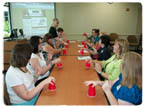
- Draw Your Dreams (PDF) is a group (or individual) activity that helps participants identify financial goals and create realistic action steps to make their dreams a reality.
- Financial Juggling (PDF) is a group activity that can serve as an ice breaker that helps participants learn classmates’ names or as an energizer to demonstrate the potential difficulty of juggling multiple financial priorities and experiencing the unexpected.
- Have You Ever (PDF) is an energizing group activity that gets participants moving and can create an early bond within a new group. This activity is also a good way to open a workshop or class if you want to promote sharing and contributing through the remainder of the presentation.
- The Cup Dance (PDF) is a group activity that can be used as a team-building exercise, incorporated into a lesson review or used to demonstrate how learning to manage money is a process.
- Expression Cards (PDF) allow people to express themselves in a safe, non-threatening way. The earlier students participate in a lesson, the more likely they’ll engage throughout the class. Use these cards as an ice breaker, to gauge thoughts or reactions to a topic or as a closing activity to bring your message full-circle. Each deck is $15 and includes 52 full-color cards. To order, email ETTQ (Executive Training and Team Quest) at OU, or call (405) 819-8428
- Money Habitudes is a card game that allows people to talk about how their habits and attitudes related to money affect how, why and when they spend, save, give, invest and go into debt.
Join our mailing list!